ArDrive
The web3-era personal hard drive: pay once, store forever.

Overview
ArDrive was building a web3 app with everyday utility for people who want to securely save, manage, and share their photos, files, and documents - so basically everybody. Most simply put: blockchain DropBox. As a B2C product with a bold vision we needed to create an aesthetic that somehow made concepts like data and blockchain feel exciting and cool.
The Challenge
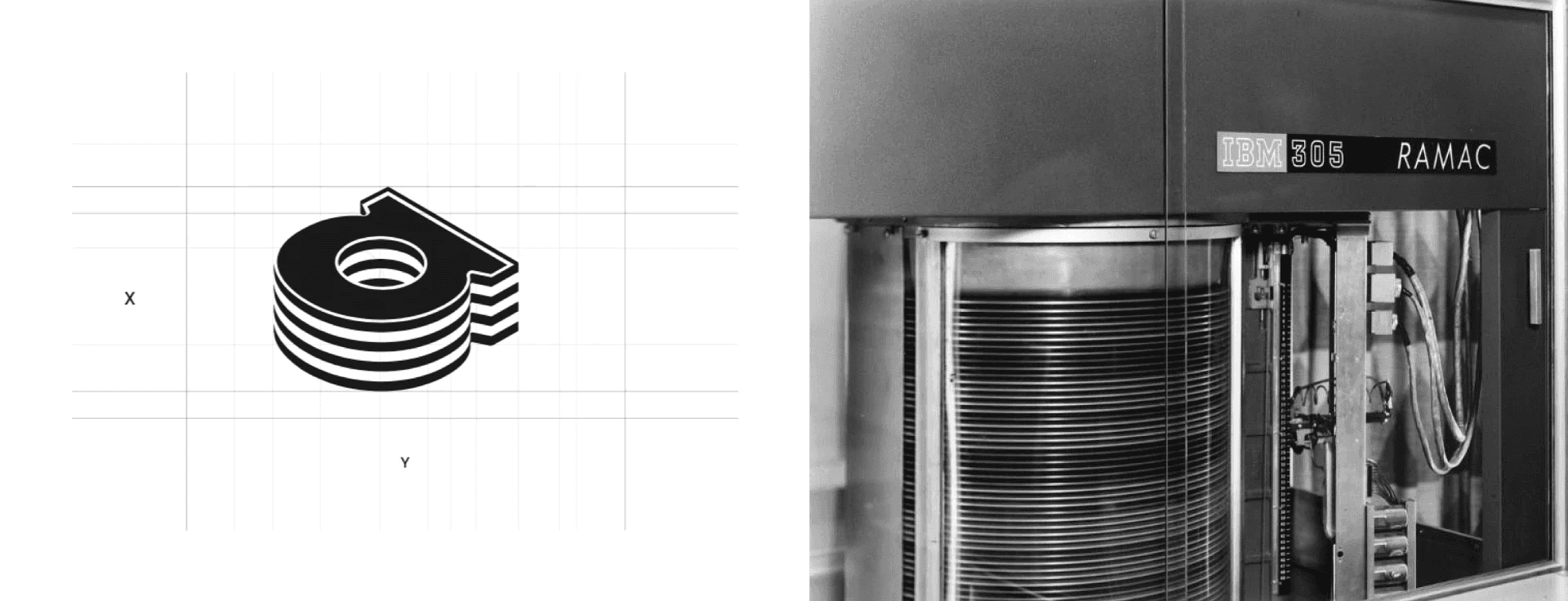
Pictured below is the 1956 IBM RAMAC 305 (Random Access Memory of Accounting and Control) - aka the world's first personal hard-drive. Specifically, this is a web1 era hard-drive. It weighed over a ton, was bigger than a fridge, and could hold the equivalent of 62,500 punched cards: 5 million characters (about 3.75 MB).
Web2 era hard drives took the form of external hard drives and software products like: Dropbox, Google Drive, One Drive, and Proton Drive, among others. The problem with externals are that they get lost, damage over time, are subject to theft, water damage, dust, dropping, etc. The problem with all of the others, are that a company actually owns your data. And as soon as you stop paying them you lose it. It can also be hacked.
Enter ArDrive: the web3 era personal hard drive. Pay once, store forever.
The branding challenge I was up against, was to create something familiar but entirely new. The language and the technology used in web3 world are just so un-relatable to the vast majority. But the problems that the technology solves are definitely relatable to everybody. One - of many - that I keep coming back to is the entirely new subscription-less business model that ArDrive unlocks for users of the product.
I wanted the brand to feel cool and relatable, while giving an old concept a fresh take.
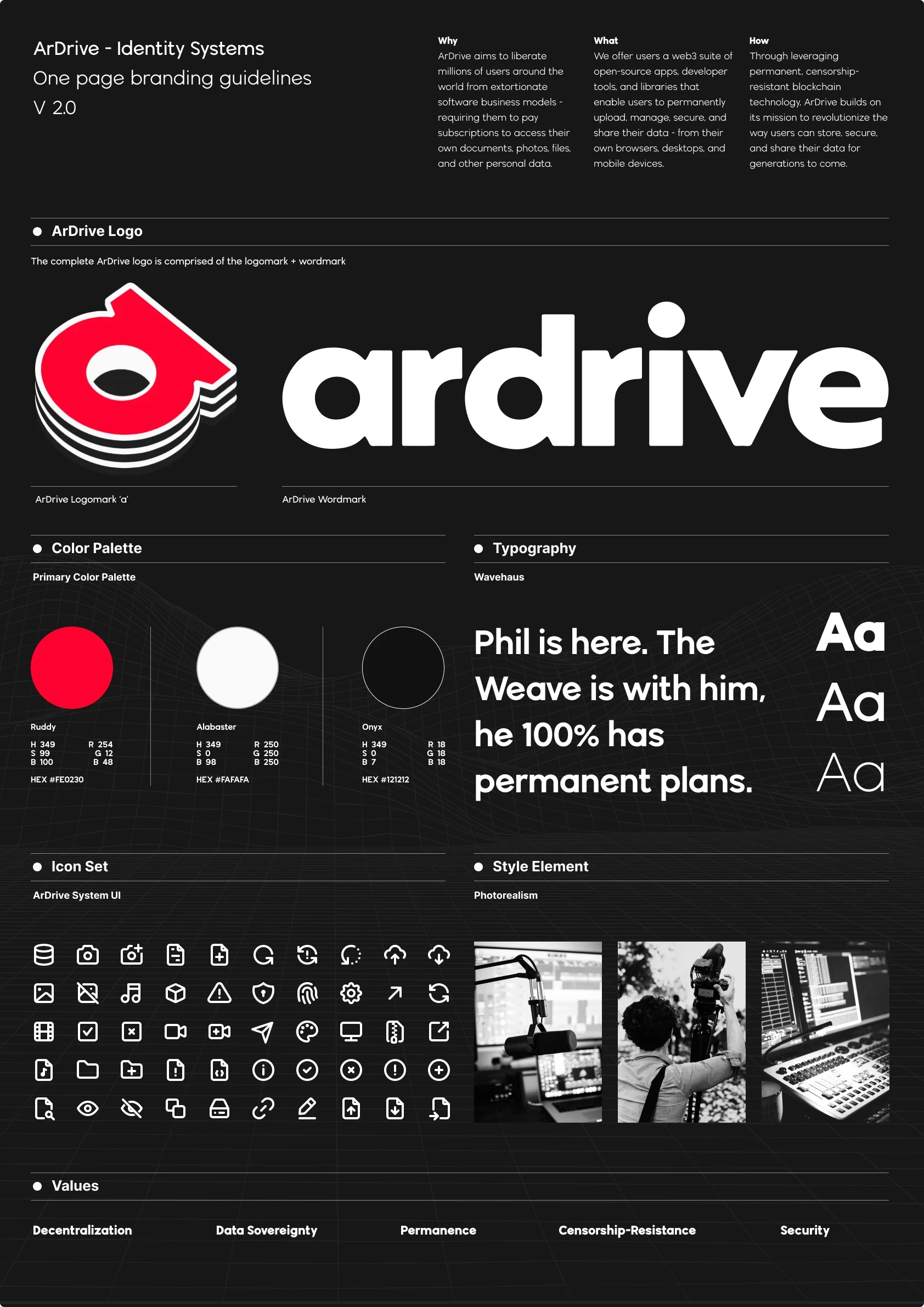
The idea behind the photorealistic approach that I recommended for the ArDrive style guide was aimed making the product feel relatable, despite being technology that wasn't. I liked the human-centric, global approach to lending to a premium visual identity. Whether a journalist, podcaster, sound engineer, filmmaker, photographer, writer, or any form of data creator, this is for you.
The Solution
The three tilted plates are reminiscent of the original 1956 IBM RAMAC 305 that started it all. The stack of discs form an 'a' for ArDrive, and the significance of 3 platters was inspired by tree rings - denoting the third age of the internet that we are now ushering-in.